Wednesday, January 31, 2018

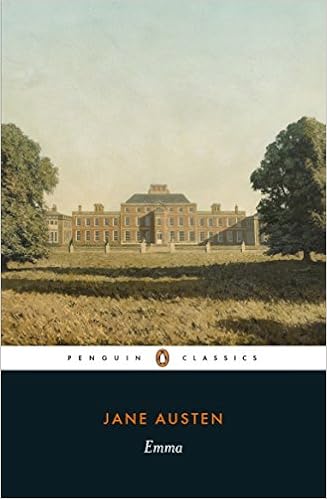
Emma, Jane Austen


I picked up Emma because I was hankering for Austen and I hadn't read it since I was a YA, or thereabouts. I remember that I hadn't liked it enormously at the time - Emma makes a lot of painful mistakes; Mr. Knightly seemed very remote, critical, and unromantic - but the book absolutely grabbed me by the heart this time.

I don't know what it was: perhaps because I'm in a position of trying (imperfectly) to educate young ladies, or because I'm more alive to my own errors, or because I've come to appreciate Mr. Knightly's character in a different light. Austen's books, to me, are all exquisite morality studies (in fine pencil, with very delicate shades of grays), in which characters' ridiculousness, often ugliness, are exposed, which almost always, transparently, trace back to raw egoism.

I think Emma is remarkable partly because of Miss Bates, who is described as being silly and tiresome, and yet with a sweetness of heart which the narrator calls out as making her worth of respect, whereas most of Austen's overtly comic characters are simply ridiculous. There is a tremendous contrast between Miss Bates' repetitive, disconnected effusions, and the horrible pretension and hypocrisy of Mrs. Elton. I also love the contrast between Frank Churchill and Mr. Knightly, where Frank, who enters the scene as a dashing, romantic hero, is revealed to be selfish, occasionally malicious, and immature. Mr. Darcy will probably always be the best of Austen's heroes, but I admire Mr. Knightly more because unlike Mr. Darcy he is generous enough to dance when he does not want to dance.
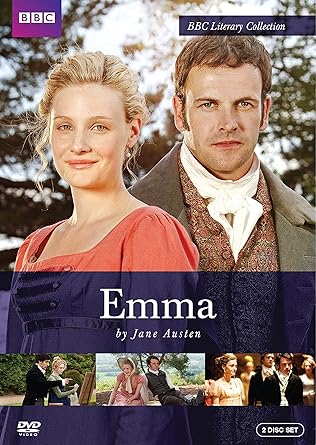
After finishing the book, I watched my way through all the film versions, and this time, discovered the BBC Masterpiece Classic 2009 mini-series with Romola Garai and Jonny Lee Miller. Sandy Welch, who has adapted a number of period dramas, plays fast and loose at times with the original, but this version absolutely captures the core of the story in a way none of the other versions do. If you haven't seen it, I highly, highly recommend it (available on Netflix). Garai engages and knocks it out of the park. Miller's Mr. Knightly bears a strong resemblance to his Sherlock in Elementary: careful, observant, concerned with truth and right.

Sunday, January 28, 2018

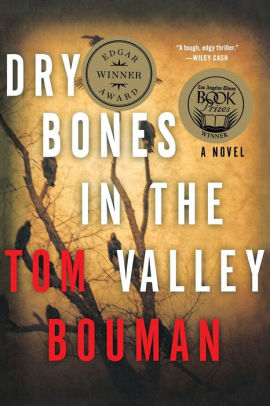
Dry Bones in the Valley, Tom Bouman

Very beautifully written - the descriptive passages, ranging from natural beauty to the sordid dwellings, were haunting. Terrific mystery with several nice, unexpected twists. Just overall a brilliant book. I'm looking forward to reading the second in Bouman's series!

Later: My only regret, the more I think about it, is that I wish the case had been tied to the land rights. The nephew would have been a fantastically unexpected villain.

Thursday, January 18, 2018

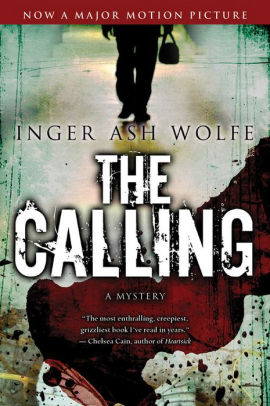
The Calling, Inger Ash Wolfe

Recently read "The Night Bell," which I loved so much I'm starting over at the beginning with the first book in the Hazel Micallef series. The villain drives the book here - completely creepy and fascinating, unforgettable. Detectives Micallef and Wingate are smart and wryly funny and have appealing fissures of rawness. Can't wait to read the next book!

Saturday, January 13, 2018

A Brilliant Death, Robin Yocum

Fantastic book. The historical setting--1970s Brilliant, Ohio--is 9/10ths of what makes this coming-of-age/murder-investigation story a terrific read. Yocum is a former crime & investigative reporter, and I particularly enjoyed the paper trail-aspect of the case. A really great washed-up detective, Tornik, pops in and out of the story - I would have liked to see more of him - but the main plot belongs to Mitchell and Travis, a likeable team of teenage buddies trading barbs and snappy dialogue as they reconstruct the cold case of Travis' missing mother.

Friday, December 29, 2017

The Night Bell, Inger Ash Wolfe

Brilliantly written: the type of mystery where there's so much going on that, at the end, you have to sit around, thinking, to figure out how all of the strands connect and resolve. Smart, with biting humor, "The Night Bell" involves a cold case series of murders from fifty years before, and the book zigzags between 2007 and 1957, involving the detective's own past. There's also her mother, a firecracker of an old lady, who is having periods of dementia in which past and present flow together, which was also brilliant. I can't recommend highly enough - I'm afraid to say more because I don't want to spoil anything in the book!

I stumbled across "The Night Bell" because I've been reading cold case mysteries, but the first book of the Detective Hazel Micallef series (which I instantly requested from the library), is "The Calling."

For some reason, the following was one of my favorite bits from "The Night Bell" (although the prologue is nothing short of phenomenal). Hazel, as a local detective, has a combative relationship with the Royal Canadian Mounted Police (RCMP), which has swooped in and taken over one of her cases, effectively blocking her investigation on everything else. She's sitting in the command trailer with the CO, Superintendent Martin Scott:
     "God. I've always found you guys inscrutable, you know?"
     "Us guys? We are also women and dogs and horses."
     "Sometimes I wonder if you're just pretending in those shiny uniforms of yours."
     He looked at her steadily for a long count. It made her feel she shouldn't blink. "I assure you," he said, "we are not pretending."
     She rose and pushed her chair away. Its feet bumped awkwardly backward over the red, tight-pile carpet. She reached out, a little stiffly she though, to shake his hand.
     "It's true you have to watch out for the horses," he said to her at the exit. "They are both inscrutable and mischievous. Come back if you like. Command is lonesome." 

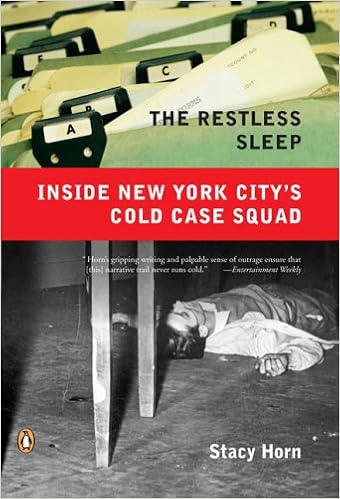
The Restless Sleep, Stacy Horn

Non-fiction. Horn's account from inside the NYPD Cold Case Squad, published in 2005. Four cases are covered in-depth, with side-ventures into Property, DNA, the prison system, finances and internal politics, the history of the squad, etc., as well as the personality of the detectives and leadership. It's fascinating and largely depressing - well, I think you would have to be someone able to see the glass '1/4 full' - at least there is a squad, and committed detectives, out there, but the task is Sisyphean and desperately underfunded.

'Success,' when it comes, takes months, years, and is by no means guaranteed. Not all of the cases Horn chooses get resolved. Worse, one really grasps how illusory and deceptive the concept of 'closure' is: If the detective is lucky enough to solve the case the perpetrator may or may not be already dead, or in prison for another crime, or the ADA may simply have no interest in prosecuting an old, possibly shaky, case. If the perpetrator is prosecuted, he or she may not end up in prison, or end up serving a ridiculously short time. Even when 'justice' is served, the families realize - after an initial euphoria - that nothing essential has changed: their loved one is still just as gone, the tragedy that has warped their lives continues.

Horn has a keen sense of the permanent, destructive tragedy of murder that gives the book tremendous poignancy, an emotion many of the detectives themselves are not able to openly feel because it would cripple their functionality. They roll their eyes at the idea of themselves as heroes - most of the job involves endless paperwork and hours on the phone, interviews and re-interviews - but in some cases they do remove a previously unknown killer from the streets, and sometimes the heroism is just that someone cares enough to make an effort on behalf of a victim everyone else seems willing to forget.

One of the unexpected things I got from reading this was a sense of the peripheral damage of 9/11, how much of a wrecking ball it was because everything else got put on hold, or lost, while they dealt with the immediate problems of a mass casualty event. It also skewed funds and attention toward counter-terrorism, which means less manpower and resources for all the other departments in this zero sum situation.

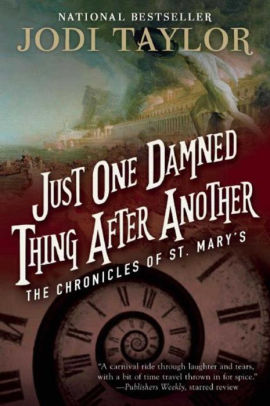
One Damned Thing After Another, Jodi Taylor

The title comes from Arnold Toynbee's famous quote "History is just one damned thing after another." A self-described blend of "history, adventure, comedy, romance, tragedy, and anything else the author could think of," this is the first book in the Chronicles of St. Mary's series involving a group of eccentric Brit time-travelling historians - if you liked (or wanted to like) the TV series "Timeless," this is all that and miles better. It is hilariously funny, although there are moments of tragedy as well, but you read it for the comedy. Taylor hooked me in the first chapter when she described the time travelling device:
"The tiny space smelled of stale people, cabbage, chemicals, hot electrics, and damp carpet, with an underlying whiff from the toilet. I would discover that all pods smelt the same and that historians joke that techies take the smell then build the pods around it."
I had downloaded the second book in the series before I finished reading the first because I knew I just wanted to keep going. You either like the St. Mary's crowd or you don't, but they reminded me of Pink's lyrics:
So raise your glass if you are wrong,
In all the right ways,
All my underdogs,
We will never be never be, anything but loud
And nitty gritty, dirty little freaks
They all do seem to be in one non-stop, zany house party that occasionally spills over into history in which anything goes.

My one complaint, and I feel a bit guilty making an issue of it, but it grates on me, is that these are not, truly, historians - I mean in the sense that they don't really care about history. History is the backdrop against which the story plays out, but it is window dressing, in a way, for example, that Connie Willis' "Blackout" never is, and the characters have a shocking lack of interest or reverence for anything in it. If you can overlook that, it's just a fun book.
     Peterson rushed past. "Come on, Max! Swans in the library!"
     "What? How?"
     "Who cares?" Good point.
     In the distance, I could hear shouting. And screaming. Familiar sounds. St. Mary's thundered past on their way to make a crisis considerably worse.
     It was nice to be home.