Wednesday, September 7, 2016

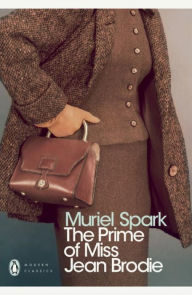
The Prime of Miss Jean Brodie, Muriel Spark

B&N link
I'm a huge fan of non-linear narrative and delayed decoding, and Spark's book is a gem. I love the way she circles around, building the characters through repetition and variation. Even Miss Brodie's speech has this circular quality as she hops from general principles or life lessons to associations or corrections in the present moment. There is an incredible build toward the final, unexpected twist.

I'm looking forward to seeing the Maggie Smith movie, but I'm very glad I read the book first. Absolutely brilliant.

There are delightfully clever lines, like the description of Miss Brodie's nemesis, Miss Mackay, "a sharp-minded woman, who smelt her prey very near and yet saw it very far." And I adore Sandy's imaginary conversations with literary figures, especially her exchange as Miss Brodie recites Tennyson's The Lady of Shallot, which is priceless:

     Down she came and found a boat
     Beneath a willow left afloat,
     And round about the prows she wrote
     The Lady of Shalott.

     "By what means did your Ladyship write these words?" Sandy enquired in her mind with her lips shut tight.
     "There was a pot of white paint and brush which happened to be standing upon the grassy verge," replied the Lady of Shalott graciously. "It was left there no doubt by some heedless member of the Unemployed."

Wednesday, August 17, 2016

The Talented Mr. Ripley, Patricia Highsmith

B&N link
"It was a good idea to practice jumping into his own character again, because the time might come when he would need to in a matter of seconds, and it was strangely easy to forget the exact timbre of Tom Ripley's voice. He conversed with Marge until the sound of his own voice in his ears was exactly the same as he remembered it."

I had seen the 1999 movie with Matt Damon years ago, and it didn't make a huge impact on me at the time, but I watched again recently and this time it absolutely jumped out and grabbed me. One of the things I admire about Damon as an actor, particularly in his earlier roles, is his willingness to take on difficult, awkward, uncomfortable roles like Tom Ripley: the humiliation, the self-conscious geekiness, the desperate unrequited adoration of Dickie Greenleaf.

Matt Damon as Tom Ripley
I picked up the original novel and found it utterly fascinating, but for completely different reasons than I expected. I think the script (adapted from the novel by director Anthony Minghella) is brilliant, and it goes a long way to making Ripley more appealing. We see his impoverished, subservient life in America; we watch the slights and slurs of Dickie and Freddie (both of whom are less likeable characters); the murder of Dickie is an unpremeditated crime of passion; we watch Ripley fall in love only to realize even if he has gotten away with his crimes, the cost is his heart and his humanity. There is a shatteringly beautiful moment of honesty--and I don't know if this is Minghella, or from one of Highsmith's later Ripley novels:
                         RIPLEY
               Whatever you do, however terrible,
               however hurtful - it all makes sense,
               doesn't it? inside your head. You never
               meet anybody who thinks they're a bad
               person or that they're cruel.

                         PETER
               But you're still tormented, you must be,
               you've killed somebody...

                         RIPLEY
               Don't you put the past in a room, in the
               cellar, and lock the door and just never
               go in there? Because that's what I do.

                         PETER
               Probably. In my case it's probably a
               whole building.

                         RIPLEY
               Then you meet someone special and all you
               want to do is toss them the key, say open
               up, step inside, but you can't because
               it's dark and there are demons and if
               anybody saw how ugly it was...
I also love the addition of the Cate Blanchet character weaving in and out and the ending with the detective. I love the opening, which begins with a case of mistaken identity (a borrowed Princeton jacket) that highlights the class differences. And I love that sometimes Ripley unexpectedly tells the truth to people he likes.

On the other hand, the book captures, excruciatingly, the psychological torment of Ripley, reminiscent, I think, of Shakespeare's Richard III. The book is also full of Italy, in a way that is more than backdrop. I'm also madly in love with Highsmith's depiction of Marge--"gourd-shaped," full of the cheerful energy of a girl-guide, pathetically in love with Dickie herself, and hardly the sharpest tack in the box. She is human and frustrating and sad and interesting in a way that Gwyneth Paltrow's character was reduced into something glamorous. It's a choice that makes perfect sense for a movie, but I liked the book better.

Mostly what I found fascinating was the bizarre combination of Ripley's character, which is emotionally and morally detached from the big events, but the incredible sensitivity to the minutia. He can tell when Marge or Dickie has cooled toward him from a look, or a change in tone, and has to guess at why. He is intensely aware of his own moods and expressions, frequently trying to change or disguise them to fit the occasion. He has a remarkable sense of not being himself, or being "better" at being himself. The paragraph I quoted earlier in which he has to practice to become like himself again is one of my favorites.

The issue of Ripley's sexuality in the book is heavily veiled (1955), but I'm glad it's more evident in the movie version, because it fits so perfectly with his perceived need to take on another role, hide his true self.

The movie ends so perfectly, that it's hard to believe there's more to Ripley's story, but I'm eager to read the additional four "Ripley" books Highsmith wrote.

Wednesday, August 10, 2016

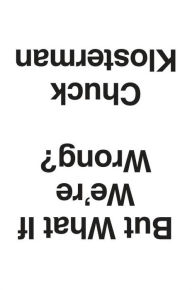
But What If We're Wrong, Chuck Klosterman

Link to B&N
Yes, the book cover is printed upside down. Also the book jacket flaps are sideways, just to throw you a bit.

I utterly, thoroughly, completely enjoyed this totally fascinating book. Klosterman imagines how what we think and value now might look from a future perspective, looking back. This is not just a matter of guessing at what might be "hot," but an in-depth, surprising analysis of what makes a book, a piece of music, television, sports, etc. memorable or valuable to people over the passage of time. This includes a retrospective analysis of the curious fate of a book like Moby Dick which had nearly no traction when it was first published, but has come to be almost synonymous with The Great American Novel.

It made me think in new ways. It made me laugh. Absolutely one of the best non-fiction books I've read this year.

Tuesday, July 12, 2016

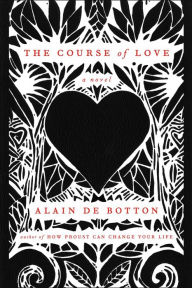
The Course of Love: A Novel, Alain de Botton

Link to B & N
"We seem to know far too much about how love starts, and recklessly little about how it might continue."

I've been following Alain de Botton's career since How Proust Can Change Your Life. I think he's absolutely brilliantly insightful and has really made it his life's work to show us how philosophy and the arts can speak, if we listen, to the very everyday challenges of being human. I also always have the sense in his work that he truly believes to understand is to feel compassion - for oneself and others - and I think that's tremendous.

So I was excited to read his latest book, The Course of Love. It is subtitled "A Novel," but it is really more of a handbook to the complexities of married love, interspersed with fictional episodes illustrating the various points. A bit like taking a seminar on relationships and watching video segments.

What de Botton advocates is approaching love and marriage, raising children, and ultimately one's life, from a perspective that is more Classical than Romantic:

"Maturity means acknowledging that Romantic love might only constitute a narrow and perhaps rather mean-minded aspect of emotional life, one principally focused on a quest to find love rather than to give it...."

"Melancholy isn't always a disorder that needs to be cured. It can be a species of intelligent grief which arises when we come face-to-face with the certainty that disappointment is written into the script from the start."

He talks about the almost inevitable disappointment that one has not, looking back, achieved greatness. Cynicism, he says, is too easy. Instead, de Botton urges use to find "the prestige of laundry."

"There is valor in being able to identify a forgiving, hopeful perspective on one's life, in knowing how to be a friend to oneself, because one has a responsibility to others to endure."

"The courage not to be vanquished by anxiety, not to hurt others out of frustration, not to grow too furious with the world for the perceive injuries it heedlessly inflicts, not to go crazy and somehow to manage to persevere in a more or less adequate way through the difficulties of married life--this is true courage; this is a heroism in a class all of its own."

Saturday, July 9, 2016

Orlando, Virginia Woolf

Link to B&N
I'm working my way slowly through Woolf, mostly chronologically, but in this case, I jumped ahead to Orlando. There are people who really, really love Woolf (on www.goodreads.com, for instance). I struggle. In Orlando I admire her psychological insight and thoughts on topics such as the value of obscurity, the subjective compression and expansion of time, the socially constrained role allowed to women. She often dazzles me with her prose ("orgulous" swans) and ecstatic, vibrant visions of Nature, but I have a very different sense of what a story is, and it comes up clearly in Orlando.

There are several points in this narrative that spans 300+ years in which Woolf in the narrator's voice excuses herself from relating the particulars of a conversation, and she passes over these noting that often what is said on these occasions is insignificant. Contrast this, however, with how Jane Austen handles similar social gatherings - for Austen the story, the revelation of character, is in the dialogue and mannerisms, sometimes the sillier the more revealing. Woolf tends to sweep over particulars as irrelevant to the big, important questions that interest her.

It is widely noted that Woolf's inspiration for Orlando was her relationship with the colorful aristocratic Vita Sackville-West, but for me Orlando the character remains vague, bizarrely detached from human relationships - there is a husband who seems more fairy tale than real and promptly disappears, an infant who no sooner is born than drops out of the story. Orlando has next to no friends, takes no interest in the changing times and displays little curiosity. The intoxication - like other Woolf heroines on my reading of them - is within one's own mind where enormous questions are posed ("Life? Love? Poetry?") and different answers tried out and discarded as insufficient.

I might be able to write this off as a difference in taste except that Woolf seems so miserable to me. Reviewers occasionally call Orlando a "romp," or words to that effect, but I just see the sadness, the loneliness, the frustration. Orlando spends a large part of the second half of the book in search of a semi-articulate desire for "Life and a lover," only to find lovers (except in the form of her absent, fantastical husband) disappointing. Life then. One of the things that fascinates me about stories about immortality is that they almost have to tackle the question of what is worth doing with a life. Orlando composes a lengthy poem she eventually manages to publish, but I think the "life" question remains open.

As perhaps it should, except that it is so easy to leave the question open, and that is no help to anyone actually engaged in finding an answer. At this point in my life, if I was going to take a stab at it, I think the answer is partly turning inward - because external goals turn out to be ephemeral - but only in order to settle the tumult inside, because I think what's really required is to look outward again from a place of centeredness, to take a genuine interest in the lives, petty though they may be, of others, to feel and act out of compassion, to pursue an intellectual and/or artistic work requiring one's highest faculties. It seems to me that Woolf's mental casting about - she uses the metaphor of the sea - keeps her perpetually wrapped in a cloud of philosophical and Romantic abstractions, and that, for all her insight, she fundamentally disdains other people because they are selfish, or fallible, or their concerns are simply more prosaic. Again, the contrast with Austen.

I do have to say that A Room of One's Own, made a huge impact on me when I read it, and when you read Orlando there is no doubt this is the same author. The idea of making Orlando a woman with a man's prior experience and perspective of the world is utterly brilliant and revolutionary genius.

7/11/16 afterthought:
My friend, who is far more knowledgeable about Woolf, explained to me that Orlando is an experiment in biography, an attempt to get at the essence of a person without being tethered, as normal biographical projects are, to dates and setting, as these could be seen as incidental to discovering, or showing, who a person really is. I admit this turns my reading of Orlando inside out - what I had taken for foreground is background and vice versa. I'll have to rethink my response to the book and give some thought to Woolf's intriguing theory. My gut response is that while the "facts" of a person's life are not sufficient to tell us who they are (born x at y to z, died x of y), what is important are the choices they make, the habits, the proclivities and pursuits, their relationships, and these are all very particular and detail-based. For me, I think, as a reader, a biography is an attempt to walk in someone's shoes, to try understand the world from his/her perspective, and that requires "grounding."

If you have a moment, please visit Jessica's blog at: http://alreadytoldtales.blogspot.com/ where she writes her thought-provoking retellings of classic fairy tales.
The Hollow Crown Disc 1: Richard II, William Shakespeare

Ben Whishaw as Richard II
I loved this production of Richard II. The play has never appealed to me greatly because Richard is such a complicated likeable/unlikeable figure, but this production absolutely made it work. Whishaw is phenomenal in the role of Richard. He has a shy quality, and a showman quality, and a martyr quality, but can turn in an instant and lash out with spite. Richard tends in the play to use language comparing himself to Jesus, and Whishaw gave you all of that, but also picked up Richard's nastiness and over-the-top theatricality. I've never been so aware of the many distinct facets of character in this role. In the "Making of" DVD extras, Whishaw mentions that he and director, Rupert Goold, talked about Michael Jackson, and I never would have thought of that comparison, but I think it's brilliant because they captured that quality of never being off-stage...even in how he sits and moves, Whishaw's Richard is always performing.

Rory Kinnear was also notable as Bolingbrook (the future Henry IV), because he brought a surprising restraint and moral uprightness, sometimes an unexpected gentleness, to the role. One had the sense he was a good man, trying to do the right thing, and getting in over his head.

David Suchet as the Duke of York
Whishaw's performance makes him the star, but a surprising amount of the heavy-lifting in the play, I think, goes to David Suchet's fantastic performance as the Duke of York. He's so good, you don't even notice how good he is, because he makes it look easy. He makes it sound as if he's speaking plain English. Patrick Stewart also comes in briefly to knock John of Gaunt's "England" speech out of the park. It's just a pity his character isn't around longer.

The other knockout feature of this production for me was the portrayal of two conflicting worlds (see also Henry IV post) between Anglo-Saxon medieval England and Richard's elaborately refined environment he's created for himself. There is a brilliant, brilliant juxtaposition at the trial-by-combat scene in which we move from knights on horses to Richard's tent decorated with flowers.

Find The Hollow Crown on Netflix, Barnes & Noble, Amazon, or iTunes: rent it; buy it. How often do you get to the chance to binge-watch the Shakespeare History Cycle??! I'm kicking myself that I didn't know this series aired in 2013. My only consolation is that it would have killed me to wait until 2016 for The Hollow Crown: The War of the Roses (Henry VI Pts 1-3 plus Richard III with Benedict Cumberbatch!).

The Hollow Crown Disc 2-3: Henry IV, William Shakespeare

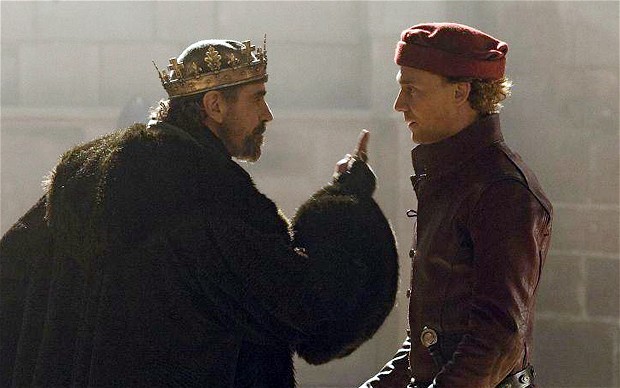
Jeremy Irons and Tom Hiddleston
The more I think about these two plays together, the more they puzzle me. I don't have a good feel for the "shape" at all. When I think of the Henry IV plays, I think of them as having three big through-lines: Hal's relationship with Falstaff, Hal's relationship with his father Henry IV, and Hal's relationship with Hotspur.

The relationship that seems to get the most attention in this 2013 version is the Hal/Falstaff, and the arc is one of disillusionment. After a jolly introduction, Tom Hiddleston plays a serious Hal, quick to take offense, dismayed to discover his companions are no better than they are. Case in point: 1 Henry IV Act V scene iv in which Falstaff presents the dead Hotspur to Hal and Lancaster as his own handiwork.


FALSTAFF: ...There is Percy:
Throwing the body down
if your father will do me any honour, so; if not, let
him kill the next Percy himself. I look to be either
earl or duke, I can assure you.
PRINCE HENRY: Why, Percy I killed myself and saw thee dead.
FALSTAFF: Didst thou? Lord, Lord, how this world is given to lying!


Simon Russell Beale as Falstaff
I've previously seen this treated as absurd - another case of Falstaff being outrageous - and Hal easily and willingly gives up his claim to killing Percy. In this version, it was a much more serious matter: Hal had "won" Hotspur's honor, exchanged honor with him by killing him in battle, and to give this up hurt. The lie was a personal injury, an example of how his dearest friend would stab him in the back if it meant personal advantage. In the end, of course, Hiddleston's Hal forces a laugh and allows Falstaff's false claim to stand, but it is a bitter moment. There's a similar point in 2 Henry IV in which Hal overhears Falstaff insulting him. I've seen this played good-naturedly - Hal revealing himself and confronting Falstaff with his own statements - but Hiddleston's version also treats this seriously. Hal is very offended and it's another blow to their, by this point, tenuous relationship. The Falstaff, Simon Russell Beale, is one of the best I've seen. I think he absolutely nails this role, possibly definitively. I think where they really got it right was a bit in which Hal confronts Falstaff after the Gadshill robbery and the two of them start circling each other, laughing and trading insults, like two boxers performing for a crowd: I think that's the Hal/Falstaff relationship perfectly.

I'm not a huge fan of Jeremy Irons as a Shakespearean actor - I think he tends to play the emotion rather than the details of the text - and I think this may be why the Henry IV/Hal conflict of the two plays didn't work for me.

Joe Armstrong as Hotspur
The Hal/Hotspur also didn't work for me, particularly, I think, because they made a choice to play Hotspur "realistically" as a rough and tumble soldier/thug, so his quick temper and reputation worked, but it was hard to picture him waxing lyrical, as he does in the text, about "plucking bright honour from the pale-faced moon." I would really, really like to see Hotspur as "the hero" of the piece, right up until near the end, so that the audience is right there with Henry IV in wishing this was the prince, and then the exchange happens where we see the value of Hal and the folly of Hotspur after all. One of the things that is difficult about this particular relationship is that Hal and Hotspur have no scenes together until the final battle, but I think this means as a director, as an actor, you have to play their scenes as if they are, in fact, very conscious of each other, thinking of each other, constantly comparing themselves mentally. At any rate, in this production, Hotspur came off as brutal and rather unlikeable, while Hal was charming from the start, so there wasn't much ambiguity to be resolved.

What I did get from this production was a vivid sense of two worlds in conflict: the rowdy, golden glow of life in the streets, and the grim, dour court obsessed with plots and civil war. And Hiddleston makes a striking Hal - he looks like a prince visiting among mortals - and it made me think of lines actually in Richard II where Richard complains that Bolingbrook (on his way to becoming Henry IV):

...Observed his courtship to the common people;
How he did seem to dive into their hearts
With humble and familiar courtesy,
What reverence he did throw away on slaves,
Wooing poor craftsmen with the craft of smiles
And patient underbearing of his fortune,
As 'twere to banish their affects with him.
Off goes his bonnet to an oyster-wench;
A brace of draymen bid God speed him well
And had the tribute of his supple knee,
With 'Thanks, my countrymen, my loving friends;'
As were our England in reversion his,
And he our subjects' next degree in hope.


and it occurred to me that Hal really loves England - I mean the people - and understands them in a way that Henry IV does not or has lost. Everyone is worried that Hal has fallen away from his princely role, but he is, in a way, coming to know his future kingdom. I think this is important, the way that it is important for Superman to love Lois Lane (possibly the first time that comparison has been made), or the Gnostic Jesus to love Sophia: God incarnate loves the fallible, all too human, world. That's tremendously beautiful and moving to me, but then is under-cut if the rest of the story is one of disillusionment and revulsion.

What does Hal learn from his time in Eastcheap? I think that's the question of the Henry IV plays, and this production seemed to say: "That a king has no true friends." I'm not sure that's how I'd tackle it. Or perhaps it is not what Hal has to learns as the fact that he is able from the start to find value in Eastcheap that shows he will be a good king.