Saturday, July 9, 2016

The Hollow Crown Disc 4: Henry V, William Shakespeare

Tom Hiddleston as Henry V
There is good Shakespeare and bad Shakespeare, and I think the difference is whether the director/actors are fighting the text or working with the text, and to be fair, in my time in theater I have done both. One tip-off is how much "extra-textual" (or intra-textual) material gets put in. To me, that indicates the director and/or actor is struggling, trying to communicate a vision or emotion in spite of the text instead of through it.

There is A LOT of extra-textual material in "The Hollow Crown: Henry V" (2013), from the framing device of Henry the Fifth's funeral - which is ahistorical, since Henry V died in France and only his bones were transported back - to additional shots of Henry riding a horse, shooting a long-bow, sailing on a ship, etc.. I can let some of those go as visual filler behind the Chorus, but there are also "meaningful" moments - glances exchanged (because they have no lines), or a bloodied scrap of cloth in the hands of the boy who "grows up" in the last moment of the film to become the Chorus.

Kenneth Branagh as Henry V
I have the 1989 Kenneth Branagh Henry V seared into my brain, so it was very interesting to watch a completely different version of the same play. Although even calling it "the same play" feels somewhat misleading - all movie versions of the play will almost certainly cut lines, but the 2013 Tom Hiddleston included a great many lines Branagh cut, and cut a great many lines Branagh included, so that one has the strange sense of watching a kind of "inverse" version of the text. The Hiddleston version cut all of the "Upon the King," soliloquy, which still amazes me, and dropped the entire traitor plot with Cambridge, Scroop, and Grey, which I think is also a great pity. One of the things you lose is the sense that France is coming after Henry, if Henry doesn't move against them.

What the 2013 version does give you is a probably more historically accurate picture of Henry's army straggling back toward Calais and a sense of doom going into Agincourt. Hiddleston delivers his "St. Crispin's Day" speech to a small group of his top lords while the commoners are standing in formation elsewhere, and it is a quiet speech in comparison to Branagh's. Branagh pulls out all the stops with a musical score, moving among his men and gathering them together in rousing camaraderie that makes you want to stand up and cheer. It's easier to see how Branagh's band of brothers carries the day against the odds.

Act V scene ii
Hiddleston, whom I liked as Hal, felt flat and humorless to me as Henry V, which is probably more historically accurate, but much less fun to watch. I particularly missed this in the final "wooing of Kate" scene, where the dominate feeling was "This is an arranged match and we might as well make the best of it." This is when I want to see Hal come back. It is an odd scene, for Henry to excuse himself as being a soldier, unable to speak of love. Surely, surely the Hal of Henry IV has more brains and imagination, but Hiddleston took these lines very seriously, playing a soldier king who looked exceedingly uncomfortable and out of his element.

What I came away with was a History Play about a particularly ugly, bloody period of time. If they hadn't been fighting in the mud at Agincourt, they probably would have been fighting in the mud at Shrewsbury again, or somewhere else: a king's strength, a man's worth, is defined by his ability to outlast his opponent in a primitive and barbaric form of warfare. Perhaps this was the point that fit with the theme of "the hollow crown," but it was depressing rather than inspiring. It seems such a waste for Hal and all he claims to have learned from his past experience.

I had a follow up thought about some parts that got cut, chiefly the "traitors" scene (Act II scene ii) and the Welsh, Irish, and Scot captains at Harfleur.... I keep thinking about Henry IV's injunction to his son to "busy giddy minds with foreign quarrels," at that part of the traitors scene is to show that if he doesn't do something, 1) France is coming after him, and 2) he'll spend his kingship defending himself from treasonous uprisings the same way Henry IV found he had to. And I think the importance of the captains at Harfleur is showing the animosities (and occasional comedy) of the various parts of Britain, but united under Henry and his cause. The weirdest part of the traitor scene is Henry's condemnation of Scroop:

But, O,
What shall I say to thee, Lord Scroop? thou cruel,
Ingrateful, savage and inhuman creature!
Thou that didst bear the key of all my counsels,
That knew'st the very bottom of my soul...


It goes on. The sense of betrayal is powerful and personal, but it doesn't really connect up to Henry IV does it? If this had been Poins, or Poins had been Scroop, it would make complete sense, but who has been so close to the king in friendship who was not in the Henry IV plays? I suppose a friendship that emerges in the time period between Henry's coronation and the events of Henry V, but it feels like such a lost dramatic opportunity.

Tuesday, July 5, 2016

Kings of the Earth, Jon Clinch

Link to B&N
"The telephone was the old fashioned kind with a dial, rotary phones they called them, and the numbers under the dial were either worn away from use or obscured by dirt. He figured the second. Either way, in the absence of the numbers a person would need to count in order to make a phone call. Graham guessed that such a telephone probably didn't get much use, considering. It was a conduit to a world that had no business here."
Two words I came across in other readers' comments were "Faulkner-esque" and "rural Gothic." I think both sum up the experience of the book very well. Clinch took the basics of a real-life case of four brothers who lived together on a farm in upstate New York and blended it with history from his own family to create a fascinating glimpse of a small knot of people "left behind" by the modern world. "I don't think Lester's family ever knew about the depression or recognized they'd gone through it," their neighbor, Preston Hatch, relates. "It was all the same to them."

The book is organized as a series of narrative reminisces from different characters in different styles and jumps back and forth among the 1930s, 1950s, and 1990s, which was fascinating - there's that "delayed decoding" thing again that I love. You ended up with an in-depth look at the family from multiple perspectives at key points in their lives. Clinch is clearly most interested in the three brothers, but I found myself wanting to know about their youngest sister who makes a break with her past and yet remains tied to it. I have to admit I was looking for something more - a tall order, possibly unfair in such a terrific book - but I kept waiting for An Event, or A Revelation, until I finally figured out one wasn't coming. In this sense, I feel like Clinch may have stuck too close to his original story, but his priority seems to be showing the facets of this hidden, backwater, rural world rather than using it as a setting for a more plot-driven story.

It's beautifully written (that's the Faulkner part) and compelling in its pathos and ugliness. Absolutely worth reading.

Thursday, June 30, 2016

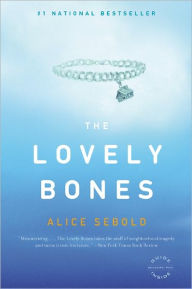
The Lovely Bones, Alice Sebold

Link to B&N
What fascinated me about this from the start - well, it's a killer concept. One of those I-wish-I-had-thought-of-it-first ideas that fills a writer with envy - at any rate, it's a sort of brilliant mash-up of two genres: murder mysteries, which I love, and coming of age stories, which I don't, but together there was a sort of amazing synergy...the coming of age parts drawing out the suspense, the mystery keeping me turning pages. It made me wonder if other genre mash-ups might be successful, or if adding a mystery (something to find out) just makes any story better.

About two-thirds through, however, I thought the balance had slipped, and I was starting to thumb through the coming of age stuff, wondering why there wasn't more on the crime. Everyone has their own tolerance level, I suppose, but there was too much sex for me, and it started to feel icky. Voyeuristic. Gratuitous. Ultimately, the "crisis" of the book is sex, not justice, and this felt wrong, at least to me. The criminal is not painstakingly, laboriously hunted down, but quietly shoved off stage, as it were, in the last moment.

What is brilliant about the book is the psychological insight into a wide variety of characters - the innocent and the guilty, female and male, young and old. Sebold's glimpses into the killer's mind and life, the description of the initial, horrible crime, were extraordinarily well done. I found the conclusion less satisfying, in particular the passage about "lovely bones" as a metaphor for the new life and connections built by the survivors which in the end Susie finds beautiful. I understand the impulse to find some good coming out of something dreadful, but I think it is wrong. I thought what Sebold captured so well in the beginning was the horror, the everyday, inelegant horror, and I wished she had stayed there.

Sunday, June 26, 2016

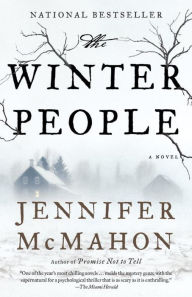
The Winter People, Jennifer McMahon

Link to book on B&N
I thought this was a great read - a suspense/mystery that takes place in 1908 and Present Day. I thought McMahon's style was engaging, the mystery unfolded with unexpected twists, and she drew me with her into deep emotions, like losing a child, that would normally send me running. It's creepy; it's gut-wrenching. I'm looking forward to reading more of this author's books.

Friday, June 17, 2016

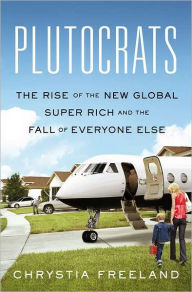
Plutocrats, Chrystia Freeland

This was a fascinating read about the history of and contemporary situation of global super-rich. I found Freeland's discussion of the similarities and contrasts with the Gilded Age industrialists, like Andrew Carnegie, illuminating. Freeland was also particularly good, I thought, at describing an "insider" view which is often hard-working and philanthropic, but can be myopic. I am fascinated by the idea of a group of people whose sense of identity is trans-national.

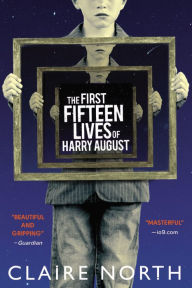
The First Fifteen Lives of Harry August, Claire North

Link to book on B&N
The premise of the book is a man, born on New Year's Day in 1919, who discovers that each time he dies, he starts over again at the same point in time, with all his life to live over again. Some things are the same, but other things change, and the variations are what make the book so fascinating. It is brilliantly, dizzingly told, hopping in and out of lives, and I couldn't put it down. Insightful, sophisticated, reminiscent of David Mitchell's Cloud Atlas. I'm eager to read more by this author.

Killed at the Whim of a Hat, Colin Cotterill

I lost count of the times I rolled over, laughing out loud, reading this book, a murder mystery set in modern day Thailand, and the first of Cotterill's "Jimm Juree" series. There are brilliant secondary characters, like Lieutenant Chompu, but the real star is Jimm as a narrator, who brings wit and irony to her backwater surroundings.

I'm in the middle of reading my way through Cotterill's earlier "Dr. Siri" series, set in the 1970s in Laos. The characters are equally engaging, although the tone is more serious. Cotterill has an appreciation for the unusual, the eccentric, the elderly. the non-conformists, which gives all his books sweetness and depth.